Aerial Work Platforms Industry Outlook: Rising demand driven by construction safety compliance, smart warehousing expansion, and utility maintenance modernization by 2035.
Industry Overview:
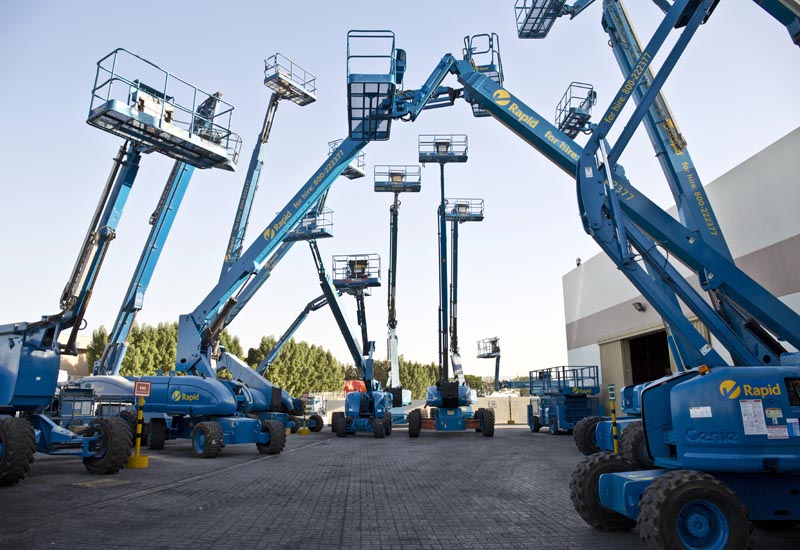
The global aerial work platforms market is estimated to reach USD 21,998.8 million in 2025, reflecting a Y-O-Y of 9.0%. growth is increasing due to rising demand for safer or faster services which also support low-emission access solutions across construction, logistics, utilities, aerospace maintenance, and advanced manufacturing. Globally market replacement of scaffolding and diesel-powered equipment to shifting requirement towards for electric and hybrid platforms is accelerating adoption due to stricter safety norms and sustainability targets. Expanding industrial infrastructure and domestic manufacturing investments are increasing fleet upgrades globally. Recent launches several technological innovations such as high-density lithium battery systems or smart load-sensing stability control with also autonomous positioning assistance and integrated telematics-driven fleet optimization are improving uptime or lowering operating costs and expanding usage across indoor and outdoor applications worldwide.
Industry Insights: Scale, Segments, and Shifts
- Market Size & Growth: The global aerial work platforms market is projected to reach USD 51,603.4 million by 2035, registering a CAGR of 8.9% between 2025 and 2035.
- Segment Analysis: Boom Lifts hold nearly 48% of the market share due to multi-directional outreach for façade installation and power-line maintenance, while Electric Scissor Lifts are expanding rapidly because enclosed warehouses and automated fulfillment centers require compact, zero-emission vertical access equipment.
- Regional Highlights: Asia Pacific leads with approximately 40% share in 2024 to large-scale industrial park development and localized manufacturing incentives support, whereas North America is showing fastest growth due to low-emission zone enforcement with diesel equipment phase-outs and strict workplace safety certification requirements.
- Competitive Landscape: The market is moderately consolidated, with key players such as JLG Industries, HAULOTTE Group, and Zhejiang Dingli Machinery Co., Ltd. These companies are focusing to provide high-duty electric boom platforms for extended shift operations which also support advanced load-sensing stability systems for uneven terrain and optimized rental based modular designs that reduce fleet downtime are encouraging adoption across construction, logistics, and utility maintenance environments.
Factors Shaping the Next Decade
- Market Gaps / Restraints: High acquisition costs of next-generation electric and hybrid aerial platforms with also limited fast-charging infrastructure at construction sites and regulatory certification delays for new lift designs continue to constrain adoption particularly among small contractors and emerging rental operators.
- Key Trends and Innovations: The industry is witnessing a transition towards high-density lithium battery packs with extended duty cycles or adaptive load-moment control systems for real-time stability adjustment with also innovation in rough-terrain electric drivetrains with integrated thermal management and self-calibrating platform leveling mechanisms are improving runtime with safety margins and job-site productivity across demanding applications.
- Potential Opportunities: Development of grid-independent aerial platforms powered by modular energy cartridges, deployment of autonomous positioning lifts for large-scale logistics hubs and creation of ultra-compact high-reach access equipment for dense urban retrofitting projects present significant untapped growth potential over the long term.
Recent Industry Updates:
- April 2025: Bronto Skylift and Designwerk Technologies AG unveiled the first fully electric truck‑mounted aerial platform (S56XR) with a 56 m working height at bauma 2025 which has featuring a high‑capacity battery system and energy‑saving design for longer operation with zero emissions.
- March 2025: MEC® Aerial Work Platforms introduced the 135‑RJ Diesel Telescopic Boom, its tallest lift yet engineered with patented Set‑In‑Place Axle technology or multi‑directional jib articulation and enhanced operational agility for demanding jobsite environments.
Industry Outlook Scope:
By Product
- Boom Lifts
- Scissor Lifts
- Vertical Mast Lifts
By Propulsion Type
- Internal Combustion Engine (ICE)
- Electric
- Hybrid
By Lifting Height
- Below 10 Meters
- 10 to 20 Meters
- 20 to 30 Meters
- Above 30 Meters
By End Use Industry
- Construction
- Warehousing & Logistics
- Manufacturing
- Mining
- Aerospace and Defence
- Utilities & Infrastructure
- Others
Geographical Insights: Emerging Corridors of Growth
- Regional Overview: While Europe is witnessing rising adoption of aerial work platforms due to increasing investments in industrial facility modernization and adoption of smart factory solutions that require mechanized access equipment. In the Middle East and Africa, growing demand for increasing commercial real estate construction and distribution projects, with adoption of advanced safety standards in workplaces are accelerating platform deployment. In Latin America is experiencing growth driven by logistics and warehouse modernization or port and shipping facility upgrades and government are supported industrial automation initiatives that emphasize workforce efficiency and mechanized operations.
- Countries to Watch: Germany continues to grow due to rapid urban infrastructure development and adoption of smart industrial facilities. Brazil is emerging as high-growth markets due to expansion of warehouse/logistics networks and energy infrastructure projects. The Saudi Arabia are rapidly integrating aerial work platforms into energy transmission and industrial modernization projects has supported by strategic government policies promoting mechanized and automated solutions.
Regulatory Environment and Policy Support
- Government Regulations & Supportive Policies: Global aerial work platforms manufacturers align with EU Machinery Regulation (EU) 2023/1230 and Brazil’s NR‑12 Machinery Safety Standard are ensuring machinery safety with operational compliance and safe use of elevated work platforms. These frameworks are accelerating the adoption of automated and safer aerial work platforms across Europe and Latin America.
- Key Government Initiatives: Initiatives like Saudi Arabia’s Standard Incentives Program Vision 2030 and Mexico’s IMMEX Industrial Automation Support Scheme encourage industrial modernization or support to investment in advanced machinery and adoption of low‑emission, automated aerial work platforms.
Competitive Landscape and Strategic Outlook
The aerial work platforms industry is moderately concentrated, with dominant players are expanding their competitiveness through the enhancing regional partnerships and establishing specializedR&D centers. Globally leading manufacturers are focusing to providing more advanced technologies such as modular electric and hybrid and pump technologies. Globally mid-sized competitors are supporting to on-demand training programs with also flexible leasing and rental models which capable for quick-deploy maintenance services to capture emerging industrial segments. Regional innovators are targeting price-sensitive markets with locally manufactured solutions and optimized supply chains are enabling faster delivery and enhanced after-sales support. These strategies enhance market penetration or service efficiency and adoption in construction, logistics, and utilities sectors.