Rubber Gaskets Industry Outlook: Growing demand from automotive electrification, oil & gas safety upgrades, and chemical processing expansion by 2035.
Industry Overview:
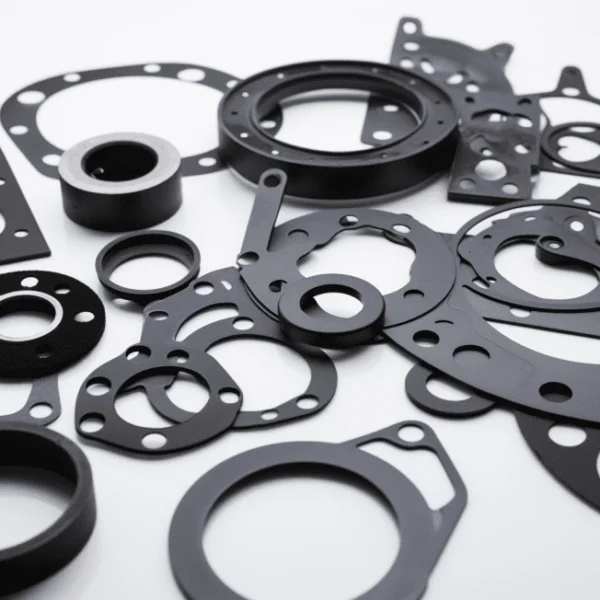
The global rubber gaskets market is estimated to reach USD 8,857.0 million in 2025, reflecting a Y-O-Y of 4.4%. Growth is driven by rising demand for precision sealing solutions across automotive electrification, oil & gas pipelines, chemical processing, food-grade manufacturing and water infrastructure. Globally Increasing market replacement of conventional sealing materials to shifting preferences for high-performance elastomers is plays vital role to accelerating adoption. Expanding industrial infrastructure investments to strengthen domestic manufacturing are driving equipment retrofits and gasket upgrades. Recent launches multiple technological innovations such as fluoroelastomer formulations for extreme chemical resistance with also multi-layer composite rubber gaskets for high-pressure systems and precision-molded micro-gaskets for electric powertrains are enhancing reliability to reducing leakage losses and accelerating global demand across multiple industries.
Industry Insights: Scale, Segments, and Shifts
- Market Size & Growth: The global rubber gaskets is projected to reach USD 13,364.8 million by 2035, registering a CAGR of 4.2% between 2025 and 2035.
- Segment Analysis: Nitrile Rubber gaskets account for nearly 30% of market share due to widespread use in automotive powertrains and fuel-handling systems. Silicone Rubber gaskets are expected to register the fastest growth supported by rising adoption in electric vehicles, electronics, pharmaceuticals, and high-temperature sealing applications
- Regional Highlights: Asia Pacific holds approximately 40% market share, supported due to chemical processing capacity additions and large-scale water infrastructure projects. North America is witnessing rapid growth due to pipeline expansion and increasing desalination and wastewater treatment investments.
- Competitive Landscape: The market remains moderately consolidated, with players such as Parker Hannifin Corporation, Freudenberg Sealing Technologies, and Trelleborg AB. These companies are focusing on advanced elastomer compound development with also support to application specific gasket engineering and precision molding technologies to enhance chemical resistance and lifecycle performance.
Factors Shaping the Next Decade
- Market Gaps / Restraints: Performance limitations of conventional rubber gaskets under extreme temperature, pressure and aggressive chemical environments remain a key restraint. Inconsistent material quality with limited availability of application-specific formulations and rising raw material price volatility are creating cost and reliability challenges which particularly for small and mid-scale industrial operators.
- Key Trends and Innovations: The market is shifting toward high-performance fluoroelastomers, peroxide-cured silicone gaskets and multi-layer composite rubber structures capable of extended service life. Advances in precision compression molding with micro-tolerance gasket fabrication and enhanced surface-treated elastomers are improving sealing efficiency and durability across critical industrial systems.
- Potential Opportunities: Strong future potential exists in hydrogen transport and storage sealing systems or advanced electric powertrain thermal sealing and next-generation water and wastewater infrastructure. Growing demand for custom-engineered or high-reliability gaskets in emerging energy and high-purity industrial applications is expected to unlock substantial long-term growth opportunities.
Recent Industry Updates:
- November 2025: Freudenberg Sealing Technologies announced the development of bisphenol AF-free, peroxidically cross-linked fluoroelastomer sealing solutions with enhanced chemical resistance and thermal stability for food and beverage contact applications, supporting safer sealing and regulatory compliance.
- October 2025: Trelleborg Sealing Solutions showcased its Isolast® PureFab® perfluoroelastomer seals and bonded slit valve door seals at Semicon Europa 2025 has designed for ultra-low particle generation and improved lifetime performance in semiconductor fabrication environments.
Industry Outlook Scope:
By Material Type
- Natural Rubber
- Nitrile Rubber
- EPDM
- Silicone Rubber
- Neoprene
- Styrene-Butadiene Rubber
- Others
By End Use Industry
- Automotive
- Oil & Gas
- Chemical & Petrochemical
- Industrial Machinery & Manufacturing
- Food & Beverage
- Pharmaceuticals
- Aerospace & Defense
- Electronics & Electrical
- Water & Wastewater Treatment
- Others
Geographical Insights: Emerging Corridors of Growth
- Regional Overview: While Europe is showing increased rubber gasket demand due to mandatory lifecycle extension of industrial equipment and compliance which driven replacement of sealing systems under tightening environmental leakage norms. The Middle East & Africa region is expanding rapidly as large-diameter pipeline networks and district cooling systems require long-life or high-pressure sealing solutions. In Latin America is witnessing growth driven by localized component manufacturing with rising demand from fertilizer and cement industries and government-backed industrial revival programs aimed at reducing import dependency.
- Countries to Watch: Germany is advancing through high-value engineered gasket demand linked to hydrogen-ready industrial systems and process decarbonization initiatives. Brazil is emerging due to refinery debottlenecking and fertilizer production expansion requiring chemical-resistant seals. Saudi Arabia is accelerating adoption through giga-scale water and industrial projects aligned with national diversification and localization strategies.
Regulatory Environment and Policy Support
- Government Regulations & Supportive Policies: Global rubber gaskets manufacturers align with India’s Quality Control Order (QCO) 2023, which mandates that rubber gaskets for pressure cookers conform to IS 7466:2023 and carry the BIS ISI Mark are ensuring product performance and legal compliance. Manufacturers also follow EU REACH Regulation (EC 1907/2006), which restricts hazardous substances in rubber materials are ensuring compliance and market access in the European Union.
- Key Government Initiatives: Initiatives like Saudi Arabia’s Standard Incentives Program for the Industrial Sector provide financial support for industrial manufacturing investments including rubber product production which encouraging modernization and adoption of advanced, low-emission manufacturing equipment.
Competitive Landscape and Strategic Outlook
The rubber gaskets industry is moderately concentrated, with dominant players expanding are their presence through regional joint ventures and specialized R&D centers to develop high-performance and application based specific products. Globally leading manufacturers are focusing to provide or support to more advances technologies to optimizing production processes with reduce waste and operational costs. The niche innovators are capturing emerging industrial segments through customized designs and flexible supply arrangements are enabling them to address specialized end-use applications and growing demand in sectors such as automotive, oil & gas, and industrial machinery.
Industry Competition:
- Parker Hannifin Corporation
- Freudenberg Sealing Technologies
- Trelleborg AB
- SKF Group
- Garlock Sealing Technologies
- Flowserve Corporation
- James Walker Group Ltd.
- Klinger Limited
- Flexitallic Group
- EagleBurgmann
- John Crane
- Chesterton Company
- Hutchinson SA
- Dana Incorporated
- ElringKlinger AG
Analyst Perspective
The rubber gaskets market is expected to grow steadily over the next three to five years which driven by advancements in material quality to enhanced durability and compliance with evolving industry standards. In emerging players that focus on customized product offerings which support more flexible manufacturing processes and value-added support services are positioned to capture niche opportunities. Long-term market resilience will be determined by strategic investments in product innovation to encourage sustainable manufacturing practices and meeting specialized client requirements which are allowing companies to strengthen competitiveness and achieve sustained growth.
What to Expect from Outlook:
- Save time carrying out entry-level research by identifying the size, growth trends, major segments, and leading companies in the global rubber gaskets market.
- Use PORTER’s Five Forces analysis to assess the competitive intensity and overall attractiveness of the global rubber gaskets market sector.
- Profiles of leading companies provide insights into key players’ regional operations, strategies, financial results, and recent initiatives.
- Add weight to presentations and pitches by understanding the future growth prospects of the global rubber gaskets market with a forecast for the decade by both market share (%) & revenue (USD Million).