
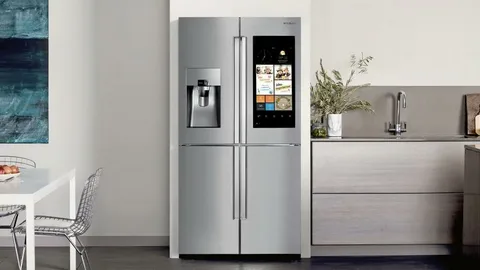
Household Refrigerators and Freezers Industry Outlook: Rising demand driven by smart, energy-efficient appliances in urban households and premium sectors, expected to grow by 2035.
Industry Overview:
The global household refrigerators and freezers market is estimated to reach USD 1,00,108.7 million in 2025, reflecting a Y-O-Y of 4.2%. Growth is driven by rising demand for savings more energy and premium refrigeration solutions across urban households, multi-dwelling residential projects, and organized retail food storage applications. Globally market replacement of conventional cooling units to shifted preferences towards inverter-based and hybrid refrigeration systems is accelerating adoption globally. Recent technology launches such as featuring precision temperature zoning or advanced compressor efficiency and next-generation low-emission refrigerants are enhancing performance to reducing energy consumption and extending product lifespan. These advancements are encouraged to replacement of demand which improving appliance penetration and accelerating market growth across both developed and emerging economies worldwide.
Industry Insights: Scale, Segments, and Shifts
- Market Size & Growth: The global household refrigerators and freezers market is projected to reach USD 1,49,616.3 million by 2035, registering a CAGR of 4.1% between 2025 and 2035.
- Segment Analysis: Freestanding refrigerators account for nearly 65% of market demand due to affordability which is easy to installation and widespread adoption across mass residential housing. Built-in refrigerators are witnessing faster growth which driven by premium housing projects and rising demand for space-optimized, aesthetically integrated appliances.
- Regional Highlights: Asia Pacific holds around 40% market share, supported by rising urban households and expanding middle-class population. North America shows strong growth momentum due to strict appliance efficiency regulations and accelerated replacement of older refrigeration units.
- Competitive Landscape: The market is moderately consolidated, with key players including LG Electronics, Samsung Electronics, and Whirlpool Corporation. These companies are focusing on high-efficiency compressors or advanced cooling architecture and sustainable refrigerant adoption to strengthen market positioning and improve long-term product performance.
Factors Shaping the Next Decade
- Market Gaps / Restraints: High upfront costs of premium refrigeration systems with advanced compressor architecture, limited availability of skilled service infrastructure for complex cooling modules and fluctuating prices of low-emission refrigerants remain key restraints, particularly in price-sensitive residential markets and emerging economies.
- Key Trends and Innovations: The industry is witnessing a transition towards multi-zone independent cooling chambers, next-generation variable-speed compressors with extended load ranges, adaptive humidity-controlled vegetable storage, and vacuum-insulated panel integration to improve thermal retention while reducing power consumption and cabinet thickness.
- Potential Opportunities: Future opportunities include fully modular refrigerator architectures enabling component-level upgrades, ultra-compact high-capacity refrigeration for micro-housing, and climate-adaptive cooling systems capable of automatically adjusting performance based on regional temperature extremes and grid conditions.
Recent Industry Updates:
- February 2025: Samsung Electronics unveiled the Bespoke AI Refrigerator Series featuring AI Energy Mode with Twin Cooling Plus™, Smart Forward and Active Fresh Filter+ for enhanced freshness or energy efficiency and smart home integration.
- May 2025: Robert Bosch GmbH introduced its XXL Top Freezer Refrigerator range with 540 L and 640 L capacities with also support to intelligent inverter compressors or adjustable shelving and enhanced LED design for superior storage and efficiency.
Industry Outlook Scope:
By Structure
- Built-in
- Freestanding
By Capacity
- Less than 15 cu. Ft.
- 16 cu. Ft to 30 cu. Ft.
- More than 30 cu. Ft.
By Door Type
- Single Door
- Double Door
- Top Mounted Freezer
- Side by Side
- French Door
Geographical Insights: Emerging Corridors of Growth
- Regional Overview: While Europe is witnessing steady growth due to strict energy-efficiency regulations are accelerated replacement of legacy appliances and strong demand from premium residential and built-in kitchen segments. The Middle East & Africa is emerging as a growth region driven by rising urban housing projects with expanding hospitality infrastructure and increasing adoption of modern household appliances. In Latin America is experiencing gradual expansion supported by improving household electrification which growing middle-income populations and government initiatives encouraging domestic appliance manufacturing.
- Countries to Watch: Germany continues to grow due to strong demand built-in refrigeration solutions aligned with sustainability standards. Brazil and Mexico are emerging as high-growth markets supported by rising appliance replacement cycles and expanding urban households. UAE are showing increasing demand driven by residential real estate development and large-scale smart city and housing projects supported by national diversification programs.
Regulatory Environment and Policy Support
- Government Regulations & Supportive Policies: Global household refrigerator and freezer manufacturers comply with the EU Ecodesign Directive (2009/125/EC) and the EU Energy Labelling Regulation (EU) 2017/1369, which mandate minimum energy-efficiency thresholds to encourage low-emission refrigerants and lifecycle sustainability. The Japan’s Top Runner Program sets progressive efficiency benchmarks are accelerating the adoption of high-efficiency compressors and next-generation insulation technologies across developed markets.
- Key Government Initiatives: Initiatives like India’s Bureau of Energy Efficiency (BEE) Star Labelling Programme and China’s Energy Conservation Subsidy Program for Home Appliances support consumer adoption of energy-efficient refrigerators through incentives, rebates and mandatory labeling are encouraging appliance replacement with domestic manufacturing upgrades and reduced household energy consumption.
Competitive Landscape and Strategic Outlook
The household refrigerators and freezers market is moderately concentrated, with leading manufacturers are strengthening market share through localized manufacturing expansion with support to region-specific product portfolios and vertically integrated supply chains. Globally dominant players are prioritizing to providing more advanced technologies such as compressor design with advanced insulation materials and differentiated cooling architectures to improve efficiency and durability. Regional competitors are focusing on cost-optimized models or faster product refresh cycles and localized after-sales networks. In emerging brands are adopting direct-to-consumer channels which support to flexible financing options and modular feature customization to address evolving household storage and energy-consumption requirements.
Industry Competition:
- AB Electrolux
- Dacor, Inc.
- Dover Corporation
- Electrolux AB
- General Electric
- Godrej Industries Ltd.
- Haier Group
- LG Electronics
- Liebherr Group
- Panasonic Corporation
- Philips Electronics
- Robert Bosch GmbH
- Samsung Electronics
- Whirlpool Corporation
Analyst Perspective
The household refrigerators and freezers market is entering a phase of measured but resilient growth during the next three to five years, growth is expected to rising appliance replacement cycles and regulatory pressure for higher energy performance. Globally market is shift toward products offering longer operational life with lower lifetime energy costs and improved adaptability to varied household usage patterns. Several manufacturers that align product development with regional efficiency standards, climate-specific performance needs and supply-chain resilience are likely to gain sustained competitive advantage as consumer purchasing decisions become increasingly value- and performance-driven.
What to Expect from Outlook:
- Save time carrying out entry-level research by identifying the size, growth trends, major segments, and leading companies in the global household refrigerators and freezers market.
- Use PORTER’s Five Forces analysis to assess the competitive intensity and overall attractiveness of the global household refrigerators and freezers market sector.
- Profiles of leading companies provide insights into key players’ regional operations, strategies, financial results, and recent initiatives.
- Add weight to presentations and pitches by understanding the future growth prospects of the global household refrigerators and freezers market with a forecast for the decade by both market share (%) & revenue (USD Million).