Ceramic Bearing Industry Outlook: Rising demand driven by aerospace manufacturing, automotive light weighting, electronics miniaturization, and advanced construction applications through 2035.
Industry Overview:
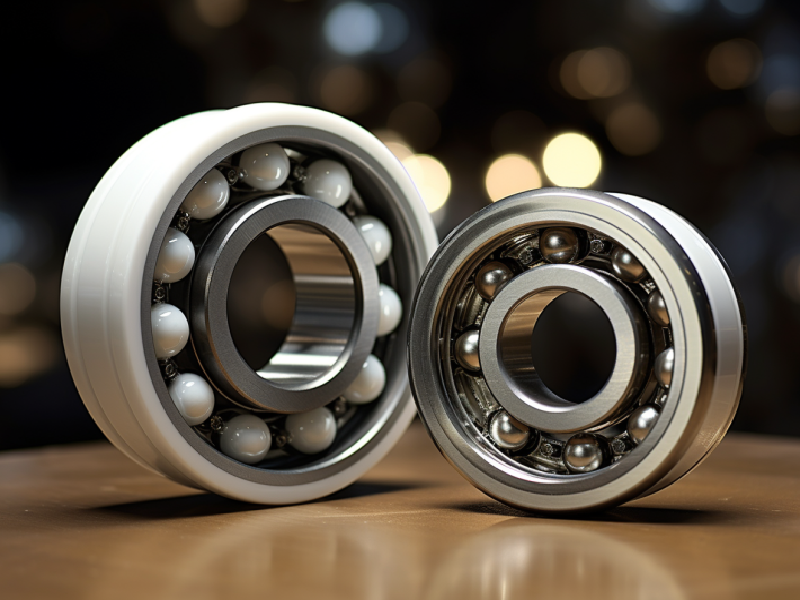
The global ceramic bearing market is estimated to reach USD 1,487.2 million in 2025, reflecting a Y-O-Y of 6.6%. Growth is driven by increasing demand for high-speed which support to low-friction components in across electric vehicles, aerospace systems, semiconductor manufacturing, and industrial automation. The replacement of conventional steel bearings with ceramic and hybrid ceramic designs is accelerating adoption worldwide due to concerns over heat resistance with also support to corrosion and saving maintenance costs. Recently launches several technological innovations such as silicon nitride material refinement with also precision grinding and high-load ceramic bearing architectures are improving durability which maintain rotational efficiency and service life are expanding ceramic bearing adoption across global industrial applications.
Industry Insights: Scale, Segments, and Shifts
- Market Size & Growth: The global ceramic bearing market is projected to reach USD 2,791.6 million by 2035, registering a CAGR of 6.5% between 2025 and 2035.
- Segment Analysis: Hybrid ceramic bearings account for nearly 55% of market demand due to their balanced cost structure and suitability for electric drivetrains and industrial motors, while full ceramic bearings are witnessing faster growth owing to increasing use in semiconductor tools and medical equipment where lubrication-free and contamination-resistant performance is critical.
- Regional Highlights: Asia Pacific holds around 40% market share in 2024 due to government has supported to manufacturing automation programs and large-scale investments in electronics and EV production, whereas North America is experiencing steady growth driven by replacement of conventional steel bearings in aerospace systems and electrified industrial machinery.
- Competitive Landscape: The market is moderately consolidated with key players such as AB SKF, ASAHI SEIKO Co. Ltd., and JTEKT Corp. These companies are focusing on developing sensor-integrated hybrid ceramic bearings for advancing fully ceramic high-speed solutions for aerospace and EV applications or innovating surface coatings to improve wear resistance and operational lifespan has enhancing both precision performance and durability in demanding industrial environments.
Factors Shaping the Next Decade
- Market Gaps / Restraints: High costs of advanced ceramic materials and combined with the brittleness of ceramic components, remain major constraints in price-sensitive markets. Limited skilled workforce and specialized infrastructure further restrict widespread adoption in emerging regions, while the lack of standardized testing protocols reduces confidence among traditional industrial buyers.
- Key Trends and Innovations: The industry is introducing advanced ceramic bearings with high-durability coatings, hybrid designs for oscillating motion, and expanded full-ceramic series optimized for ultra-precision applications. These innovations improve operational reliability to helps reduce maintenance and enhance performance in high-speed or high-temperature, and precision industrial environments.
- Potential Opportunities: The development of impact-resistant ceramic composites could unlock heavy-duty and shock-prone applications currently inaccessible to conventional ceramics. In a modular or zero-lubrication high-speed bearing systems could enable new deployment in aerospace, robotics and fully automated precision machinery which will be creating entirely new revenue streams in the future.
Recent Industry Updates:
- September 2025: SKF showcased at 2025 Tech & Innovation Summit new low‑friction and next‑generation bearing solutions including a low‑friction tapered bearing unit that reduces energy losses by up to 14 % and advanced ball bearing units requiring no relubrication to improving life and hygiene in food and beverage applications.
- January 2025: Schaeffler introduced optimized current‑insulated bearings from its J20G series featuring advanced protective coatings that enhance resistance to electrical currents and improve durability for rail, wind energy, and industrial automation sectors.
Industry Outlook Scope:
By Product Type
- Hybrid Ceramic Ball Bearings
- Full Ceramic Ball Bearings
By Material Type
- Silicon Nitride (Si₃N₄)
- Zirconia Oxide (ZrO₂)
- Alumina Oxide (Al₂O₃)
By Application
- Automotive
- Aerospace and Defense
- Medical Equipment
- Semiconductor Manufacturing
- Industrial Machinery
- Wind Energy
- Others
Geographical Insights: Emerging Corridors of Growth
- Regional Overview: In Europe, growth increasing due to robotics for biotech labs and micro-scale manufacturing where ceramic bearings provide reliability under high-speed with high-precision conditions. In the Middle East & Africa, adoption is rising due to demand in desalination plants which has concentrated solar power systems and modular defense equipment. Latin America has showing fastest growth due to agro-industrial automation and specialty food processing machinery, where ceramic bearings enhance equipment longevity and operational efficiency in harsh or abrasive environments.
- Countries to Watch: Germany continues to be an innovation clusters and Industry 5.0 adoption driving ceramic bearing use in precision and industrial applications. Brazil is emerging as high-growth markets owing to investments in mining automation, industrial modernization, and renewable energy infrastructure which boost demand for durable or low-maintenance bearings. The Saudi Arabia are rapidly due to wind energy projects to supported by strategic government policies promoting industrial diversification and technology adoption.
Regulatory Environment and Policy Support
- Government Regulations & Supportive Policies: Global ceramic bearing manufacturers comply with India’s Bearings (Quality Control) Order, 2025 and China’s High-Performance Bearings R&D Incentive Framework which ensure product quality or operational safety and adherence to advanced manufacturing standards. These regulations are accelerating the adoption of precision or high-speed and durable ceramic bearings across automotive, industrial machinery, and renewable energy sectors.
- Key Government Initiatives: Initiatives such as India’s Production Linked Incentive (PLI) Scheme for Auto Components and China’s Advanced Mechanical Components Subsidy Program encourage industrial modernization to support capital investment and adoption of high-performance with low-maintenance ceramic bearings that boosting production capabilities and market growth.
Competitive Landscape and Strategic Outlook
The ceramic bearing industry is moderately concentrated, with leading players are acquiring their presence through collaborative prototyping hubs to provide ultra‑precision micro-machining services and customized low-volume production lines to serve niche aerospace and biomedical applications. Globally specialized competitors are differentiating through rapid aftermarket replacement programs with enhancing modular retrofit kits that enabling faster market entry or customer-specific adaptation and strengthened regional penetration across emerging industrial segments.
Industry Competition:
- AB SKF
- ASAHI SEIKO Co. Ltd.
- C and U Group
- Grupo NBI
- Harbin Bearing Manufacturing Co. Ltd.
- JTEKT Corp.
- LYC Bearing Corp.
- MinebeaMitsumi Inc.
- NACHI FUJIKOSHI Corp.
- NSK Ltd.
- NTN Corp.
- RBC Bearings Inc.
- Regal Rexnord Corp.
- Schaeffler AG
- The Timken Co.
Analyst Perspective
The ceramic bearing market increasingly favors companies that integrate localized material sourcing, with support rapid retrofit programs and low-volume bespoke manufacturing. It’s can be beneficial for establishing regional prototyping hubs and modular service offerings to serve specialized segments such as biomedical devices and niche industrial machinery. Adopting these tailored approaches enhances market resilience to accelerates entry and strengthens customer-specific competitive positioning over the next three to five years.
What to Expect from Outlook:
- Save time carrying out entry-level research by identifying the size, growth trends, major segments, and leading companies in the global ceramic bearing market.
- Use PORTER’s Five Forces analysis to assess the competitive intensity and overall attractiveness of the global ceramic bearing market sector.
- Profiles of leading companies provide insights into key players’ regional operations, strategies, financial results, and recent initiatives.
- Add weight to presentations and pitches by understanding the future growth prospects of the global ceramic bearing market with a forecast for the decade by both market share (%) & revenue (USD Million).