Industrial Gearbox Industry Outlook: Rising demand driven by automation and renewable energy integration in manufacturing and construction sectors by 2035.
Industry Overview:
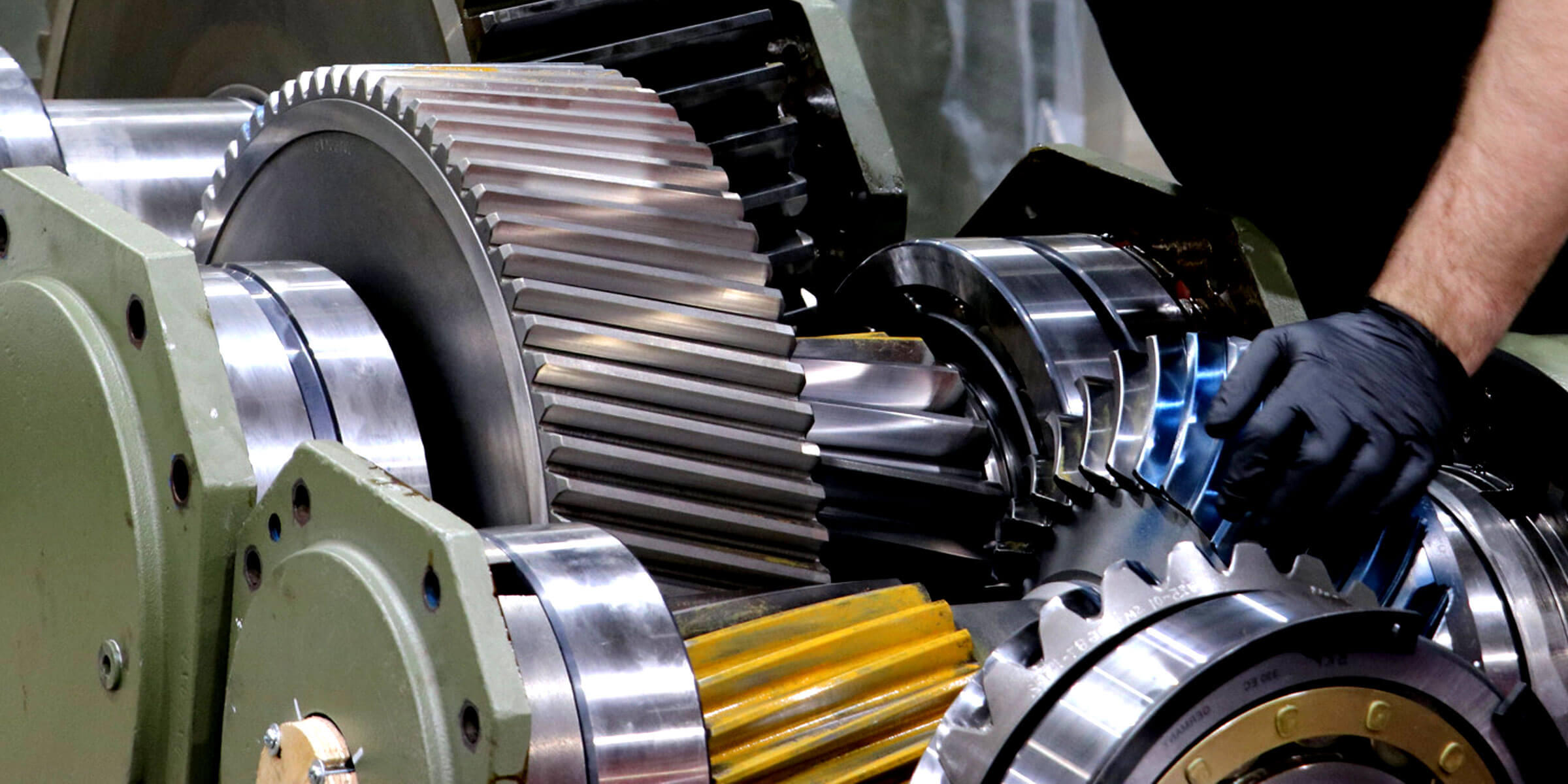
The global industrial gearbox market is estimated to reach USD 32,687.5 million in 2025, reflecting a Y-O-Y of 4.7%. Growth is driven by rising demand for compact transmission solutions across heavy machinery, automated material handling, and renewable energy sectors. In an automotive assembly and electric vehicle production expansion with also industrial infrastructure requirement are robust gearboxes for precise power delivery and reliability. Recently launches several technological innovations include modular planetary gear systems with integrated sensors for automated operations also support to high‑torque planetary gearboxes for heavy-duty machinery and advanced inline planetary designs for energy-efficient power transmission. These technologies enhance efficiency with reduce downtime and accelerate global adoption across multiple industrial applications across the globe.
Industry Insights: Scale, Segments, and Shifts
- Market Size & Growth: The global industrial gearbox market is projected to reach USD 51,250.6 million by 2035, registering a CAGR of 4.6% between 2025 and 2035.
- Segment Analysis: Helical gearboxes dominate the market with approximately 45% share due to heavy-load applications, while Planetary gearboxes are expected to register the fastest growth owing to their compact design and adaptability for automated manufacturing lines.
- Regional Highlights: Asia Pacific holds nearly 40% of the market share in 2024 driven by rapid industrial automation and large-scale infrastructure projects, while Europe shows strong growth due to modernization of manufacturing plants and incentives for energy-efficient machinery.
- Competitive Landscape: The market is moderately consolidated with key players such as SEW‑EURODRIVE, Bonfiglioli, and Nidec. These companies are focusing on developing modular and high-efficiency gear solutions are enhancing automation integration and support precision operations across industrial applications.
Factors Shaping the Next Decade
- Market Gaps / Restraints: High costs and complexity of ultra‑high‑performance gear systems for heavy industrial use or limited standardization across modular platforms and challenges in maintaining precision in extreme operating environments remain key restraints in cost‑sensitive segments, slowing broader adoption in smaller facilities.
- Key Trends and Innovations: The industry is witnessing a transition towards rail‑optimized compact spur gear drives designed for demanding transport conditions and enhanced torque‑density industrial transmissions with significantly increased load capacities and reduced footprint are pushing performance limits in mobility and large‑machinery sectors, improving reliability and lifecycle efficiency worldwide.
- Potential Opportunities: Development of adaptive load‑responsive transmission mechanisms for robotics and automation, and high‑density, customizable gearbox platforms tailored for renewable energy and smart factory ecosystems are poised to create substantial future revenue streams and drive accelerated adoption across advanced manufacturing and sustainable infrastructure.
Recent Industry Updates:
- December 2025: Bonfiglioli showcased an expanded industrial automation ecosystem at SPS Nuremberg featuring its Axia drive family with gearmotors integrated into automation packages for material handling and conveyor systems which enhancing operational efficiency
- September 2025: A drivetrain technology leader showcased a full lineup of high-precision with high-durability gearbox solutions at the China International Industry Fair including new planetary and strain-wave gear units designed for robotics and automation applications to improve productivity and durability in advanced manufacturing.
Industry Outlook Scope:
By Type
- Helical
- Planetary
- Bevel
- Worm
- Spur
- Others
By Design
- Parallel Axis
- Angular Axis
- Others
By End Use Industry
- Material Handling
- Construction
- Power Generation
- Mining
- Food & Beverage
- Manufacturing Industry
- Packaging & Labeling
- Chemicals
- Automotive
- Others
Geographical Insights: Emerging Corridors of Growth
- Regional Overview: While Europe is seeing increased industrial gearbox demand due to rising adoption of modular drive platforms in brownfield factories with also stricter lifecycle efficiency standards for rotating equipment and growing use of high-load gear systems in automated intralogistics hubs. The Middle East and Africa are showing rapid growth corridors due to increasing localized gearbox assembly requirements and harsh-environment drivetrain demand for desert operations and expansion of port mechanization and heavy lifting systems. In Latin America’s is expected to gain high growth due to expansion of agro-industrial processing facilities and increased deployment of gear-driven equipment in bulk material handling terminals.
- Countries to Watch: Germany continues to gain traction due to rapid commercialization of high-precision gear architectures and export-oriented drive manufacturing. Brazil and Chile are accelerating adoption through modernization of bulk processing and mineral logistics equipment. The UAE and Saudi Arabia are advancing gearbox deployment via port automation and industrial equipment localization mandates.
Regulatory Environment and Policy Support
- Government Regulations & Supportive Policies: Global Industrial gearbox manufacturers are aligning with the EU Ecodesign Regulation (EU) 2019/1781 for electric motors and drive systems and the U.S. Department of Energy (DOE) Energy Conservation Standards for Industrial Equipment which support to reduced power losses and lifecycle compliance. Government is enforced to these frameworks are accelerating the adoption of high-efficiency with low-loss and digitally optimized industrial gearboxes across Europe and North America, particularly in manufacturing, power generation, and material handling sectors.
- Key Government Initiatives: Initiatives like India’s Production Linked Incentive (PLI) Scheme for Advanced Manufacturing and Japan’s Green Transformation (GX) Industrial Policy promote domestic manufacturing and electrification of industrial systems. These initiatives are encouraging investments in smart, low-emission industrial gearbox technologies and supporting rapid modernization of heavy industrial infrastructure.
Competitive Landscape and Strategic Outlook
The industrial gearbox market remains moderately concentrated, with leading manufacturers are strengthening competitiveness through support localized assembly hubs with provide application-specific gearbox platforms and heavy-duty lifecycle testing facilities. Globally prominent players are prioritizing to precision machining upgrades with torque-density optimization and service-led aftermarket contracts, while niche competitors differentiate through retrofit compatibility which also support rapid customization cycles and performance-based supply agreements targeting emerging industrial users.
Industry Competition:
- Bonfiglioli S.p.A.
- Sumitomo Heavy Industries Ltd.
- SEW-EURODRIVE GmbH & Co. KG
- Nidec Motor Corporation
- Bauer Gear Motor GmbH
- Emerson Electric Co.
- Elecon Engineering Co. Ltd.
- Dana Brevini Power Transmission
- Johnson Electric Holdings Ltd.
- Flender GmbH
- Comer Industries S.p.A.
- China High-Speed Transmission Equipment Group Co. Ltd.
- Bondioli and Pavesi S.p.A.
- ZF Friedrichshafen AG
Analyst Perspective
The industrial gearbox sector is transitioning toward to support high performance and digitally monitored operating environments. In the upcoming next three to five years, market growth is expected to be increasing due to strict energy efficiency mandates or uptime optimization requirements and data which has supported to asset management practices. New market entrants adopting service-centric models and low-loss transmission designs are likely to strengthen resilience and secure long-term competitive positioning.
What to Expect from Outlook:
- Save time carrying out entry-level research by identifying the size, growth trends, major segments, and leading companies in the global industrial gearbox market.
- Use PORTER’s Five Forces analysis to assess the competitive intensity and overall attractiveness of the global industrial gearbox market sector.
- Profiles of leading companies provide insights into key players’ regional operations, strategies, financial results, and recent initiatives.
- Add weight to presentations and pitches by understanding the future growth prospects of the global industrial gearbox market with a forecast for the decade by both market share (%) & revenue (USD Million).