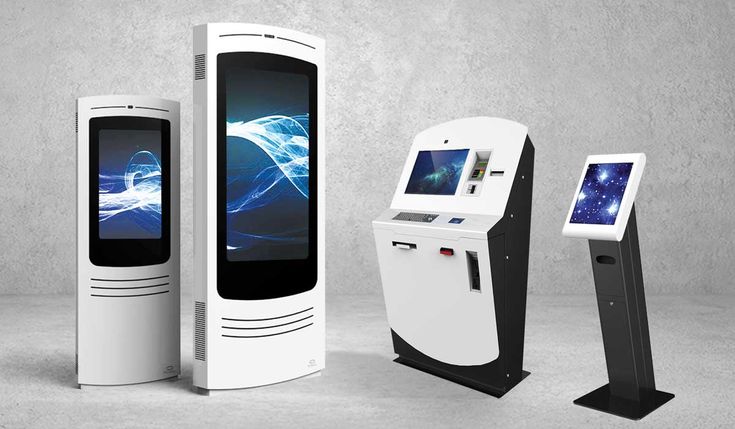
AI-driven self-service ecosystems and retail automation are significantly accelerating global demand for interactive kiosks across high-growth sectors
The global interactive kiosk market is undergoing condition which moving towards strong transformation which driven through the rapid digital adoption with increasing labor cost pressures and the need for seamless, contactless customer experiences. According to the latest strategic industry outlook by Stalwart Research Insights they clearly mention that, the market is gained USD 36.4 Bn in 2025 and is projected to reach around USD 52.8 Bn by 2032 with expanding at a CAGR of nearly 6.4% during the forecast period. This notable growth gaining due to strong supported to the rising deployments across retail, BFSI, transportation, healthcare, and food service industries where automation and efficiency are becoming critical priorities.
It becomes possible in reality trough the increasing businesses with adopting interactive kiosks to streamline operations which beneficial for reduce queues and enhance customer satisfaction. Increasing integration for digital payment systems with biometric authentication and AI-powered interfaces. It is lead to the transforming kiosks into intelligent service platforms capable of delivering personalized and efficient user experiences.
Key Market Drivers and Growth Catalysts
- Rising demand for contactless and frictionless customer engagement
- Increasing labor costs encouraging automation adoption
- Rapid expansion of retail self-checkout and QSR ordering systems
- Integration of AI, IoT, and cloud-based kiosk management platforms
These drivers are collectively enhancing their role within the kiosks it’s as essential infrastructure in modern customer service environments.
Operational Transformation Across Retail and Food Service Environments
Globally retailers are aggressively for deploying self-checkout kiosks to handle growing footfall without proportionately increasing workforce costs. These systems are be3neficial to reducing billing times with improving throughput during peak hours and minimizing errors associated with manual transactions. Within the large format retail chains are particularly prioritizing kiosk integration as part of their store modernization strategies where automation is directly linked to profitability and customer retention.
In parallel the food and beverage sector is witnessing for strong momentum especially within quick-service restaurant chains. In the self-ordering kiosks are enabling higher order accuracy and faster service cycles while also encouraging upselling through dynamic menu displays. This shift is helping brands optimize with revenue as per customer while managing labor shortages more effectively which particularly in urban and high-demand locations.
Technology Integration Moving Beyond Traditional Interfaces
These market is now experiencing a rapid transition toward adapt intelligent kiosk systems equipped with advanced capabilities such as computer vision with AI-driven recommendations and cloud-based orchestration. Its involved advanced technologies are allowing operators to monitor device performance in real time which should supportive to predict maintenance requirements and roll out software updates across entire kiosk networks without physical intervention.
At the same time there is a growing which continuous emphasis on user safety and accessibility. Even the innovations such as antimicrobial touchscreens and touchless interaction interfaces are gaining traction which particularly in healthcare and public infrastructure environments. These developments are not only improving hygiene standards but are also increasing user confidence in shared digital systems which has become a critical factor in post-pandemic deployment strategies.
Cost Pressures and Supply Chain Realities Influencing Market Expansion
While demand is continuous surging due to notable deployment strategies are being carefully recalibrated due to persistent cost pressures. Availability of initial investment which required for hardware even installation and system integration continues to be a barrier for small and mid-sized enterprises. During the globally disruption due to middle east conflict which create fluctuations for semiconductor supply and display component availability are impacting production timelines and pricing structures.
Increasing manufactures response even solution providers are focusing on build advances modular kiosk designs that allow phased deployment and easier upgrades. It is a visible shift toward software-led differentiation where companies are enhancing value through analytics with remote management and service-based models rather than relying solely on hardware innovation. This approach is helping balance cost concerns while sustaining long-term scalability.
Expanding Deployment Across Infrastructure and Financial Inclusion Initiatives
Interactive kiosks are increasingly with being positioned as critical infrastructure components within smart city and public service frameworks. Even governments and private stakeholders are deploying kiosks for improve accessibility to essential services such as ticketing, banking, and information dissemination which particularly in densely populated urban centers.
At the same time in an emerging market are enhancing utilization for kiosk-based systems to filled bridge gaps in financial inclusion. In regions where traditional banking infrastructure is limited also kiosks are enabling access to digital payments with account services and government schemes. Its play’s dual role for supporting both advanced urban ecosystems and underserved communities is significantly broadening the market’s application landscape and reinforcing its long-term relevance.
Competitive Landscape: Focus on Smart Sensors and Integrated Solutions
The market is moderately consolidated, with top companies are focusing on making strong scaling deployments while improving service capabilities. Instead of just manufacturing hardware even leading players are positioning themselves as full-service solution providers.
Top Industry Players:
• NCR Voyix
• Diebold Nixdorf
• Glory Global Solutions
• Samsung Electronics
• Advantech Co., Ltd.
These companies are ready for heavily investing in cloud platforms with AI-based interfaces and partnerships with payment and retail technology providers to strengthen their market positioning.
Analyst Perspective: Shift from Hardware Sales to Service-Led Models
Within this market we can see is clearly moving away from one-time hardware sales toward shifted for adapt recurring revenue models built around software with analytics and remote management. Globally many operators are prioritizing for enhance kiosk networks that can be centrally controlled even updated, and optimized in real time.
In emerging players those are entering the market with lightweight, plug-and-play kiosk solutions designed for rapid deployment in smaller cities and high-growth regions. This dual shift toward both large-scale enterprise systems and flexible localized deployments is expected to define competitive dynamics over the next few years.