
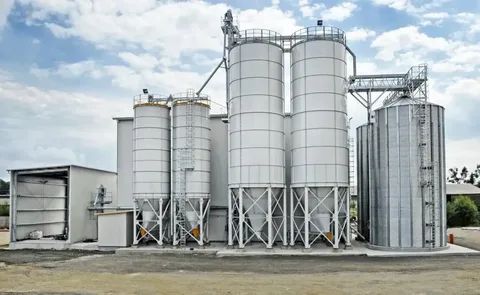
The global silos and storage systems market is moving towards gaining strong growth due to rising demand for automated storage solutions across agriculture, food processing, and industrial sectors. According to the latest strategic industry outlook by Stalwart Research Insights they clearly mention that, the market is captured USD 5.94 Bn in 2025 and is projected to reach USD 8.95 Bn by 2032 with registering a CAGR of 6.0% during the forecast period. This growth is closely linked with increasing investments in bulk material handling with modernization of grain storage facilities and the need for efficient inventory management systems.
It becomes possible in reality trough the transition from conventional storage methods toward adapt smart with modular and digitally integrated silo systems is gaining strong momentum. Continuous expanding advanced solutions such as automated grain handling with real-time monitoring sensors and hybrid material construction are enabling higher storage efficiency while minimizing operational losses. Industries are increasingly their prioritizing safety compliance and process optimization for covered positioning silos as critical assets in modern supply chains.
- Market projected to grow from USD 5.94 Bn in 2025 to USD 8.95 Bn by 2032
- Rising adoption of automated and modular silo systems
- Increasing focus on safety, efficiency, and real-time monitoring
This shift clearly reflects how storage systems booting into intelligent infrastructure layers supporting productivity with traceability and operational control.
Precision Inventory Control and Digital Integration Reshaping Storage Operations
Digitalization is redefining the operational role of silos which transforming them from static storage units into dynamic with data-driven systems. Expanding integration of Industrial IoT platforms and centralized control systems is enabling for real-time inventory tracking which also supporting to condition monitoring and predictive maintenance capabilities.
• Real-time monitoring improving stock accuracy and visibility
• Integration with IoT and centralized control platforms
• Predictive maintenance reducing downtime and operational risks.
These has capabilities for allowing operators to optimize storage cycles with reduce spoilage and improve supply chain synchronization which particularly in large-scale agricultural and industrial environments.
Post-Harvest Loss Reduction Driving Agricultural Infrastructure Investments
Gaining major growth because some driver contributes within this market is the increasing focus on reducing post-harvest losses, especially in emerging economies. In the governments and private stakeholders are investing their level for advanced storage systems to enhance food security and minimize wastage across the agricultural value chain.
• Growing demand for large-capacity grain storage systems
• Government-backed infrastructure investments in agriculture
• Rising need for quality preservation and supply chain efficiency.
In the modern silos equipped with aeration systems with moisture control and automated discharge mechanisms are significantly improving storage conditions are ensuring longer shelf life and better quality of stored produce.
Material Innovation and Structural Engineering Enhancing System Durability
Globally continuous enhance advancement in technological within the materials and design are playing a crucial role in improving the durability and efficiency of silos. Manufacturers are increasingly adopting corrosion-resistant coatings, high-strength alloys, and modular bolt-assembled structures to enhance performance and lifecycle reliability.
- Adoption of corrosion-resistant and hybrid material designs
- Growth of modular and scalable silo structures
- Improved structural strength for high-capacity storage
These innovations are particularly important in harsh operating environments, where durability, weather resistance, and maintenance efficiency are critical factors influencing system adoption.
Cost Barriers and Legacy System Integration Limiting Adoption Pace
Despite captured the strong growth potential but the still market has faces constraints related to high capital investment and challenges in upgrading existing infrastructure. Many operators continue to rely on traditional storage systems due to cost sensitivities and technical limitations.
- High upfront costs for advanced silo systems
- Challenges in retrofitting legacy infrastructure
- Limited digital infrastructure in developing regions
Globally trying to overcoming these barriers will require flexible financing models with scalable solutions and increased awareness of long-term efficiency benefits associated with modern storage technologies.
Industrial Expansion Creating Demand Beyond Agriculture
While agriculture are remains captured dominant segment with demand for silos and storage systems is expanding rapidly across industries such as cement, mining, chemicals, and energy. The need for efficient bulk material handling and storage in these sectors is creating new growth avenues.
- Rising adoption in cement, mining, and chemical industries
- Increasing need for bulk material storage in infrastructure projects
- Expansion of industrial manufacturing and processing facilities
This diversification is enhancing to the market’s resilience with reducing dependency on seasonal agricultural demand cycles.
Competitive Strategies Cantered on Smart, Scalable, and Service-Led Models
The competitive landscape is moderately consolidated, with key players shifted their focus to build strong technological innovation also customization and service-based offerings to strengthen market positioning. Within these market many dominant companies are investing in smart silo ecosystems with digital platforms and lifecycle management services to enhance customer value.
Top Industry Players:
• Ahrens Agri
• Bentall Rowlands Silo Storage Ltd
• Chief Agri/Industrial Group
• Grain & Protein Technologies
• Silos Cordoba
These players continuous trying to made strong partnerships with localized manufacturing and application-specific solutions to address diverse industry requirements and expand their global footprint.
Shift Toward Networked Storage Ecosystems and Performance-Based Models
The market is moving toward high growth potentials with interconnected storage networks where silos are integrated with digital farm management systems and industrial supply chains. This shift is enabling for real-time coordination with performance tracking and outcome-based service models.
- Integration with digital farm and industrial management platforms
- Emergence of performance-based and service-led contracts
- Increasing focus on operational efficiency and asset optimization.
This evolution clearly indicates that future growth will not only depend on storage capacity expansion but also on how efficiently storage assets are utilized with monitored and integrated into broader operational ecosystems.