
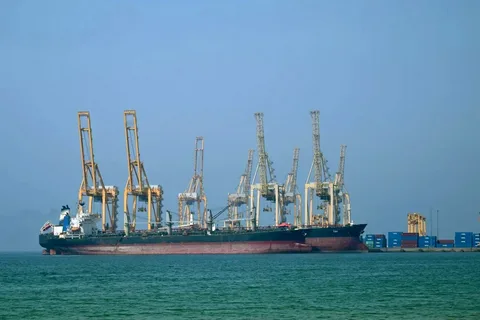
Aggressive US Oil Strategy Raises Stakes in Ongoing Hormuz Crisis
Globally now fresh geopolitical tensions surging has intensified after Donald Trump заявил that oil would begin flowing “very quickly” with or without cooperation from Iran. This statement comes at a time when the Strait of Hormuz is a critical global oil transit route which remains disrupted due to ongoing regional conflict. Trump’s remarks have reflected a more assertive US stance indicating readiness to ensure supply continuity even in the absence of diplomatic alignment with Tehran.
This statement has drawn global attention because the Strait of Hormuz carries a substantial share of the world’s oil shipments which making any disruption highly sensitive for energy markets. Trump also warned against Iran imposing additional costs or restrictions on oil tankers that signalling possible economic or strategic countermeasures if such actions proceed.
This development clearly highlights a shift toward unilateral energy security strategies where geopolitical influence over supply routes becomes a central policy priority.
- US signals oil flow continuity without Iran’s cooperation
- Warning issued against tanker restrictions or fees
- Stronger unilateral positioning by US leadership
Despite these showing confidence and the lack of operational clarity raises questions about how such a strategy would be executed in a volatile conflict environment.
Strait of Hormuz Disruptions Continue to Pressure Global Supply Chains
The ongoing disruption in the Strait of Hormuz continues to strain global oil supply chains with shipping activity still operating below normal levels. Even after these temporary de-escalation efforts which create logistical challenges and spared security concerns have prevented a full restoration of transit flows.
In a world the backlog of oil tankers and their delayed cargo movements are affecting both exporters and importers which creating ripple effects across global energy markets. Many dominant countries have heavily dependent on Gulf oil supplies are particularly exposed as delays translate into pricing pressure and supply uncertainty.
Expansions in persistent disruption in this critical maritime route reinforces how vulnerable global trade remains to geopolitical instability.
• Limited vessel movement continues
• Backlogs impacting oil deliveries
• Supply chain uncertainty remains elevated.
These challenges lead that even partial restrictions in key chokepoints can significantly disrupt global energy systems.
Strategic Ambiguity Creates Market Uncertainty
While the US has projected with confidence in restoring oil flows which create the situation on the ground remains uncertain. There is a visible gap between political statements and actual maritime activity that leading to cautious responses from energy companies and shipping operators.
Industry players are hesitant to resume full-scale operations due to ongoing security risks even complication within the insurance and unclear regulatory conditions. This cautious stance is contributing to continued volatility in oil markets so stakeholders wait for more concrete developments.
This uncertainty continuous driven through the conflicting signals continues to shape global market sentiment.
• Gap between political messaging and reality
• Energy firms remain cautious
• Market volatility persists.
This ambiguity underscores the difficulty of translating geopolitical intent into operational outcomes during periods of conflict.
Rising Geopolitical Risks Increase Military and Economic Pressure
The intensifying rhetoric around the Strait of Hormuz has raised concerns about potential military escalation. With many dominant regions already under heightened to this tension and any aggressive move to enforce oil flow could trigger broader conflict dynamics.
Iran’s trying to gained strategic position along the strait gives it significant leverage and any attempt to bypass or challenge that control could escalate tensions further. Additionally, the possibility of transit restrictions or additional charges on oil shipments adds another layer of economic pressure.
Escalating risks highlight the fragile balance between energy security and regional stability.
- Military escalation risks increasing
- Iran’s strategic leverage remains strong
- Economic pressure through transit control possible
These factors continuous contributing to emphasize how geopolitical tensions in energy corridors can quickly evolve into broader global risks.
Volatile Outlook as Markets Await Clear Direction
Global are looking ahead but which remains facing uncertain as markets attempt to interpret both political signals and operational realities. The United States that maintain a confident stance on ensuring oil supply continuity with actual normalization of flows may take longer due to logistical and geopolitical constraints.
Amid fluctuating geopolitics across the globe that impacting on Investors, even governments and energy companies are preparing for multiple scenarios with ranging from gradual stabilization to prolonged disruption. The direction of oil markets will largely depend on how tensions in the Strait of Hormuz evolve and whether diplomatic efforts can align with strategic actions.
This uncertainly across the middle east so it’s expected to dominate near-term global energy dynamics.
- Oil price volatility likely to continue
- Diplomatic developments remain critical
- Long-term stability still unclears
The situation showing directly reflects a complex interplay between geopolitical strategy and energy security so even limited developments can significantly influence global markets and economic conditions.