
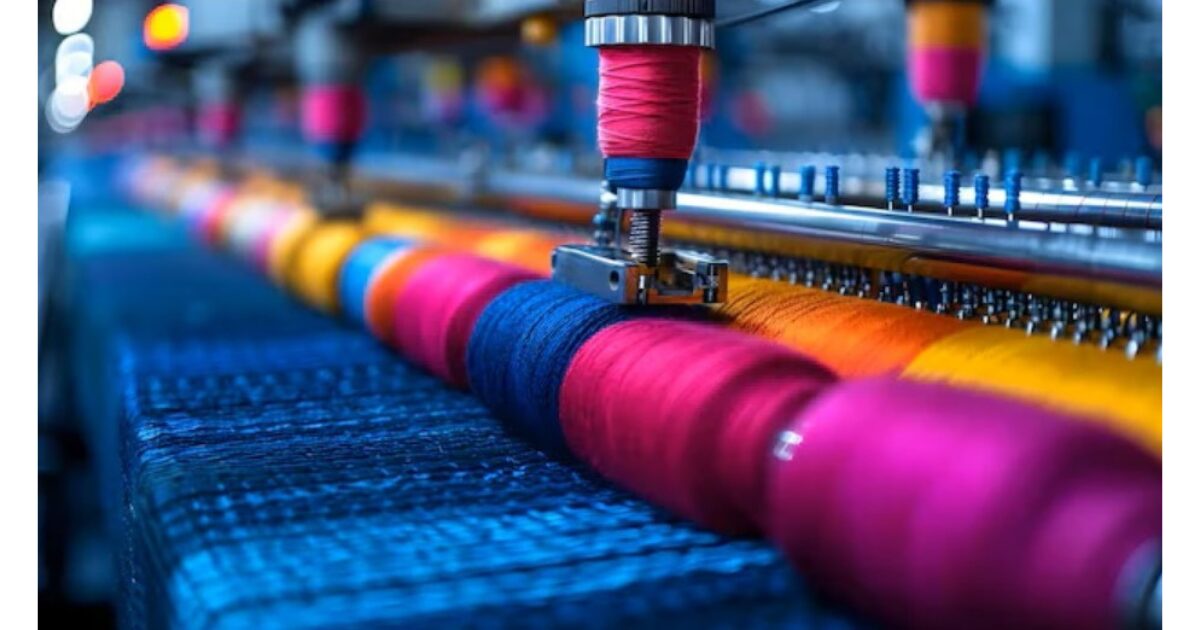
The global technical textiles market is undergoing a strong structural expansion phase and it led to shifting from traditional fabric systems toward adapt engineered which must be supportive to high-performance materials used across automotive, healthcare, construction, defense, and industrial applications. According to the latest strategic industry outlook by Stalwart Research Insights they clearly mention that, the market is captured USD 254.5 bn in 2025 and is projected to reach USD 477.8 bn by 2032 with registering a CAGR of 6.5% during the forecast period. Growth is being supported through the increasing industrial automation also enhance modernization in infrastructure and rising demand for multifunctional textile solutions with advanced safety and performance attributes.
Within the market major transformation is being shaped trough the geopolitical realignment and manufacturing decentralization. Globally many countries are faces supply chains restriction so increasing efforts for reduce dependency risks and strengthen domestic production capabilities.
Geopolitical Supply Chain Diversification Reshaping Global Production Networks
Recent global trade fragmentation and supply chain disruptions have significantly influenced technical textile production strategies. In governments and manufacturers level they are prioritizing for build regional self-reliance and diversified sourcing models to reduce exposure to global volatility.
Key developments include:
- Shift toward nearshoring and reshoring of textile manufacturing facilities
- Expansion of defense-oriented textile procurement in Western economies
- Reduced dependence on single-region raw material sourcing networks
- Policy-driven incentives for domestic high-performance textile production.
This shift is creating new industrial corridors across the India, Vietnam, Mexico, and Eastern Europe which provide support to cost efficiency and policy are aligning with global demand for advanced technical textiles.
Industrial Automation and Smart Manufacturing Transforming Production Efficiency
In technical textiles industry is expanding their footprint because increasingly demand for integrating automation and digital technologies. This advancement must be improving scalability and cost efficiency in manufacturing processes even lead the smart production systems are becoming a core competitive advantage.
Key advancements include:
- AI-enabled weaving systems for precision composite fabrication
- Robotics-based nonwoven production lines improving output consistency
- Real-time quality inspection systems using machine vision
- Digital twin-based simulation for textile process optimization
These technologies advancement beneficial for reducing production waste with improving quality control and enabling faster adaptation to customized industrial requirements.
Industrial Demand Shift Toward High-Performance and Functional Applications
Industry is witnessing strong demand across many sectors where material performance directly impacts on operational efficiency and safety outcomes.
Key application drivers include:
- Lightweight automotive materials for emission reduction compliance
- Medical textiles used in surgical, hygiene, and infection-control applications
- Geotextiles supporting infrastructure resilience and smart city development
- Industrial filtration systems used in environmental protection and emissions control
This shift promoting to the application-specific engineered textiles rather than conventional fabric-based solutions.
Sustainability Transition and Advanced Fiber Engineering Driving Material Innovation
Governments stricter sustainability regulations and corporate ESG commitments are enhancing the development of eco-friendly and recyclable textile materials. Globally dominant manufacturers are focusing on reducing environmental impact while enhancing product durability.
- Bio-based nonwoven materials for sustainable industrial applications
- Recycled high-performance fibers reducing raw material dependency
- Flame-resistant and lightweight synthetic composites for safety applications
- Energy-efficient production processes supportive to reducing carbon footprint
These developments made alignment which leading global sustainability frameworks while supporting long-term cost efficiency.
Supply Chain Volatility and Cost Pressures Impacting Market Scalability
Despite strong growth potential but still market continues to face many challenges during the operational and structural that influence expansion strategies.
- Rising raw material costs linked to petrochemical price fluctuations
- High capital investment required for advanced manufacturing systems
- Complex compliance requirements across multiple regional regulations
- Logistics instability due to ongoing geopolitical tensions
These challenges impacting on many companies to address these constraints for adopting multi-region sourcing strategies with expand their localized production clusters and flexible manufacturing systems.
Competitive Landscape Focused on Innovation-Led Manufacturing and Strategic Partnerships
The market is moderately consolidated, with leading players turned towards how improve technological innovation which should be supportive to sustainability integration and global expansion strategies.
Top Industry Players:
• Freudenberg Group
• Berry Global Group
• Toray Industries
• Milliken & Company
• SRF Limited
These companies are ready for heavily investing in advanced nonwoven technologies with smart textile engineering and bio-based fiber development strengthening their competitive positioning across global markets.
Shift Toward Intelligent, Resilient and Application-Driven Textile Systems
The technical textiles industry is boosting rapidly into a strategic materials ecosystem where resilience, intelligence and sustainability both define long-term competitiveness. In the smart textiles integrated with sensing and monitoring capabilities are gaining traction in healthcare, defense, and industrial safety applications.
At the same time continuous increasing integration of digital manufacturing, circular production models and advanced composite materials is reshaping production ecosystems. This convergence of technology which also provide support to sustainability. Even geopolitical restructuring is positioning technical textiles as a critical enabler of industrial resilience and next-generation manufacturing systems.