
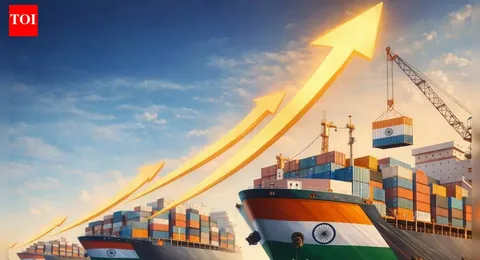
FTA to Boost Trade and Exports
India is taking a significant step toward enhancing its global trade footprint in the upcoming Free Trade Agreement (FTA) with New Zealand. It has highlighted by Union Commerce and Industry Minister Piyush Goyal. This agreement is expected to reshape bilateral trade dynamics that cler5y reflects India’s broader strategy of expanding international trade partnerships and enhancing export competitiveness across key sectors.
The FTA is being a part of India’s ongoing efforts beneficial for integrate more deeply into global value chains and diversify export markets beyond traditional partners. It is also aligned with the country’s ambition to position itself as a major global manufacturing and export hub.
- FTA aimed at strengthening bilateral trade and investment flows
- Supports India’s strategy of expanding global trade partnerships
- Enhances positioning as a global export hub
This development gives signals to India’s proactive approach to strengthening economic diplomacy and trade-led growth.
Bilateral Trade Expected to Double with Market Access Expansion
One of the key highlights of the between India and New Zealand FTA is its potential to significantly increase bilateral trade volumes. These current trade between the two nations is estimated at around $2–3 billion with projections suggesting a doubling to nearly $5 billion over the next five years.
It is expected trough this agreement must be supporting to reduce tariffs with improve ease of doing business and create new opportunities for exporters across sectors such as agriculture, textiles, pharmaceuticals and engineering goods.
- Bilateral trade projected to reach ~$5 billion within five years
- It’s led to significant tariff reductions and improved market access
- Creating expansion opportunities for MSMEs and export-driven industries.
This quantitative expansion has clearly highlighted the agreement’s potential to drive measurable economic gains for both countries.
Duty-Free Access and Export Boost for Indian Industries
It shows the major provision under the FTA includes granting duty-free access to nearly 70% of Indian exports entering New Zealand. This is expected to provide a strong boost to sectors such as leather also textiles and manufacturing which particularly benefiting small and medium enterprises.
Even within the specific industry clusters such as footwear manufacturing hubs are expected to gain enhanced access to global markets for driving production scale and employment growth.
- Around 70% of Indian goods to enter duty-free
- Boost for leather, textiles, and manufacturing sectors
- Increased export competitiveness for MSMEs.
These measures are likely to accelerate India’s export growth trajectory while strengthening its industrial base.
Employment, Mobility, and Talent Exchange Opportunities
Beyond trade within this agreement also includes provisions aimed at enhancing workforce mobility and international employment opportunities. The FTA is expected to facilitate around 5,000 temporary work visas for Indian professionals along with additional work and holiday visa programs.
This will create new pathways for skilled workers, students and professionals to access global opportunities further strengthening people-to-people ties between India and New Zealand.
- Approximately 5,000 work visas for Indian professionals
- Additional work and holiday visa opportunities
- Strengthened education and talent mobility linkages
Such provisions are expected to enhance India’s global talent footprint and support knowledge exchange.
Sectoral Growth and Industrial Impact
The FTA is also expected to drive sector-specific growth across multiple industries. For instance, India’s leather and footwear industry is projected to benefit significantly from expanded export access and reduced trade barriers.
While government projections suggest that certain sectors such as leather manufacturing, could target long-term growth trajectories reaching $50 billion by 2030 supported by improved global trade linkages.
- Strong growth outlook for leather and footwear exports
- Long-term sector potential reaching $50 billion by 2030
- Enhanced integration into global supply chains.
This sectoral boost reinforces the broader economic impact of the agreement.
Strengthening India’s Global Trade Strategy
The India and New Zealand FTA is part of a larger framework of trade agreements being pursued by India including recent deals with major global economies. These agreements have aim to create a more resilient and diversified trade ecosystem while reducing dependency on limited markets.
India’s expanding to enhances their network of FTAs clearly reflects a strategic shift toward high-value trade partnerships to improved supply chain integration and long-term economic sustainability.
- Expansion of multi-country trade agreements
- Focus on resilient and diversified export markets
- Strengthening role in global trade networks.
As global trade dynamics evolve even India’s proactive approach positions it as a key player in shaping future economic partnerships.
Trade-Led Growth Momentum Gains Strength
This announcement creates surrounding the India and New Zealand FTA directly highlights a broader narrative of India’s accelerating trade expansion strategy. It has combining tariff reductions with market access, workforce mobility, and sectoral growth initiatives, the agreement is expected to deliver both immediate and long-term economic benefits.
With bilateral trade projected to double, duty-free access expanding across product categories and new employment opportunities in emerging and the FTA represents a comprehensive step toward strengthening India’s global economic presence.
This initiative reflects India’s commitment to leveraging trade as a core driver of economic growth with industrial expansion and international collaboration in an increasingly interconnected global economy.