Rising Automation, EV Integration and Demand for Precision Monitoring Driving Market Expansion
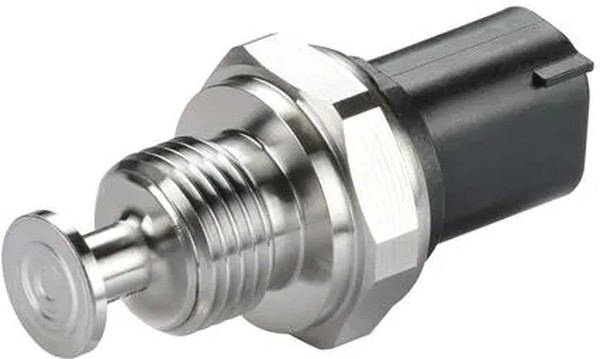
The global pressure sensor market is gaining nowadays vary good positions within the market with strong growth as industries increasingly shift toward automation, electrification, and real-time monitoring systems. According to the latest strategic industry outlook by Stalwart Research Insights they clearly mention that, the market is hold USD 21.44 Bn in 2025 and is projected to reach USD 32.05 Bn by 2035 with registering a CAGR of approximately 4.1% during the forecast period. It directly reflecting consistent demand across automotive, industrial, healthcare, and consumer electronics sectors. It creates growth trajectory is being shaped by the rising complexity of modern systems which accurate pressure measurement is becoming essential for safety with efficiency, and performance optimization.
These markets are continuous expanding transformation within the market is the evolution of pressure sensors from basic measurement components to integrated intelligence enablers. Within these market sensors in electric vehicles are play a critical role for protect battery safety with thermal regulation and emission systems. In a industrial environments it is provide support to predictive maintenance and real-time diagnostics even expand advancements in technologies. It involves upgradations such as MEMS miniaturization, AI-enabled calibration, and optical sensing are significantly improving accuracy and reducing size and cost enabling broader adoption across industries.
Electrification and Industrial Automation Driving Continuous Demand Cycles
Increasing requirements for adaption of pressure sensors is linked to continuous upgrades and integration across digital ecosystems rather than one-time installations.
• Electric vehicles requiring multi-point pressure monitoring across battery and fluid systems
• Industrial automation enabling real-time monitoring and process optimization
• IIoT integration expanding connected sensor networks in smart factories
• Healthcare wearables increasing demand for compact, high-precision sensors.
This shift directly indicates a transition toward sustained demand cycles where pressure sensors are embedded into evolving technologies and infrastructure systems.
Sensor Evolution: From Measurement Tools to Intelligent System Nodes
The pressure sensors are rapidly transforming towards adapt intelligent nodes that are capable to actively contribute to system-level analytics and operational decision-making.
• Absolute pressure sensors leading due to precision-critical applications
• Differential sensors gaining traction in energy-efficient industrial systems
• AI-enabled sensors supporting predictive maintenance and diagnostics
• MEMS-based miniaturization enabling compact and scalable designs.
This evolution is redefining the competitive landscape where integration capability and data intelligence are becoming key differentiators.
Adoption Challenges Limiting Penetration in Traditional Sectors
Despite this strong demand certain structural are continue creating barriers which influence adoption across industries, particularly in legacy systems.
- High initial investment for digital and smart sensor technologies
- Performance limitations in extreme environmental conditions
- Slow replacement cycles in traditional industrial infrastructure.
These factors clearly highlight the importance of cost efficiency and durability improvements to accelerate broader market penetration.
Emerging Applications Expanding Market Opportunities
The pressure sensor market is expanding rapidly into new applications with high-growth areas is creating diversified opportunities for manufacturers.
- Renewable energy and hydrogen systems requiring advanced monitoring
- Smart infrastructure integrating sensor-based efficiency systems
- Wearable healthcare devices driving ultra-thin and flexible sensor demand
- Consumer electronics embedding compact sensing technologies
These create emerging applications are reshaping the market with strengthening long-term growth potential.
Technology Advancements Driving Integration and Performance Efficiency
Globally increase t Innovation in sensing technologies which focused on improving integration and which should be supportive to scalability, and system compatibility.
- Optical and resonant sensors enhancing accuracy in complex environments
- Wireless connectivity enabling scalable and flexible deployment
- Modular sensor platforms supporting customization
- Smart diagnostics improving real-time system performance
These advancements are beneficial for hold positioning pressure sensors as key enablers of intelligent and connected ecosystems.
Competitive Landscape: Strategic Focus on Intelligent and Connected Solutions
The pressure sensor market is moderately consolidated, with leading players trying to provide strong financial support to innovation with partnerships in regional players and expansion into advanced applications.
Top Industry Players:
• Robert Bosch GmbH
• Siemens AG
• ABB Ltd.
• STMicroelectronics
• Baker Hughes
These companies are ready for investing in AI-enabled sensing technologies such as wireless platforms and Industry 5.0-aligned solutions to strengthen their market presence and capture emerging opportunities.
Market Direction: Embedded Intelligence and Real-Time Monitoring Shaping Growth
The future of the pressure sensor market is being shaped trough the transition toward embedded intelligence and continuous monitoring systems.
- Predictive maintenance increasing demand for smart sensor integration
- Edge computing enabling real-time data processing and faster decision-making.
Globally dominant industries within this market those continue to move toward automation and connected infrastructures related to pressure sensors will play a critical role is enables to provide data-driven operations. The market is expected to grow steadily with innovation and integration, also it required cost efficiency emerging as key factors defining long-term success.